Mysterious Marks Trail
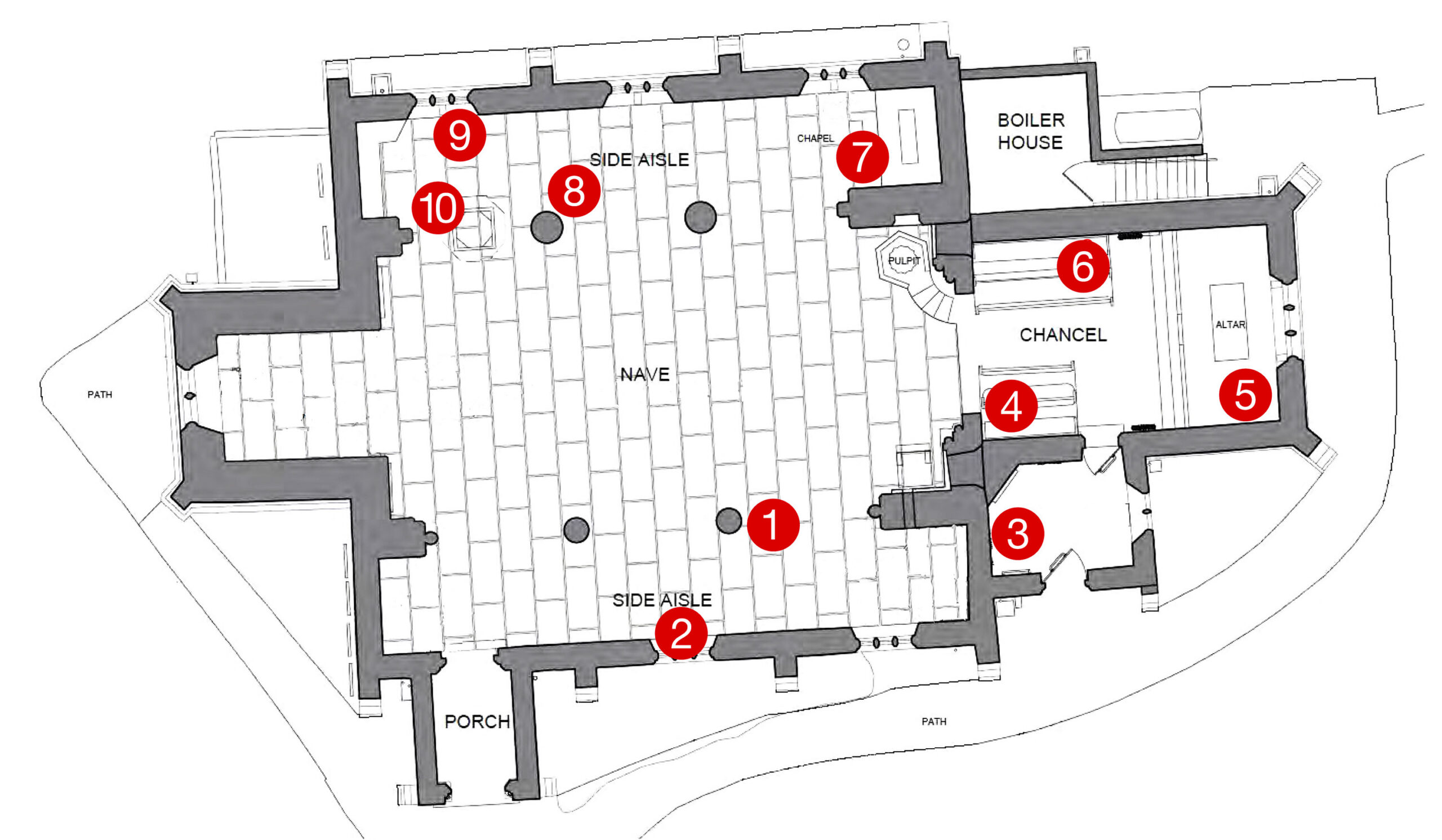
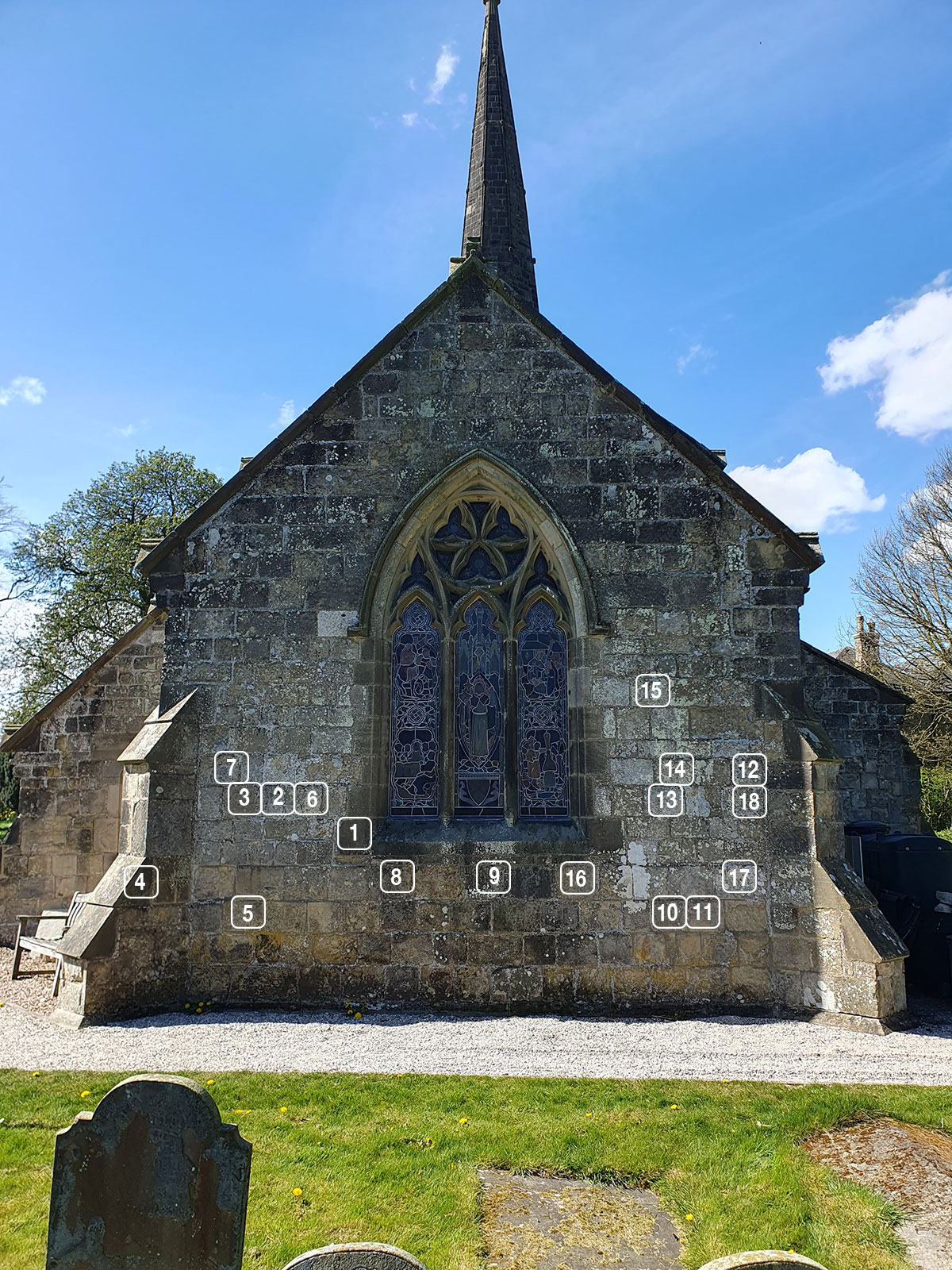
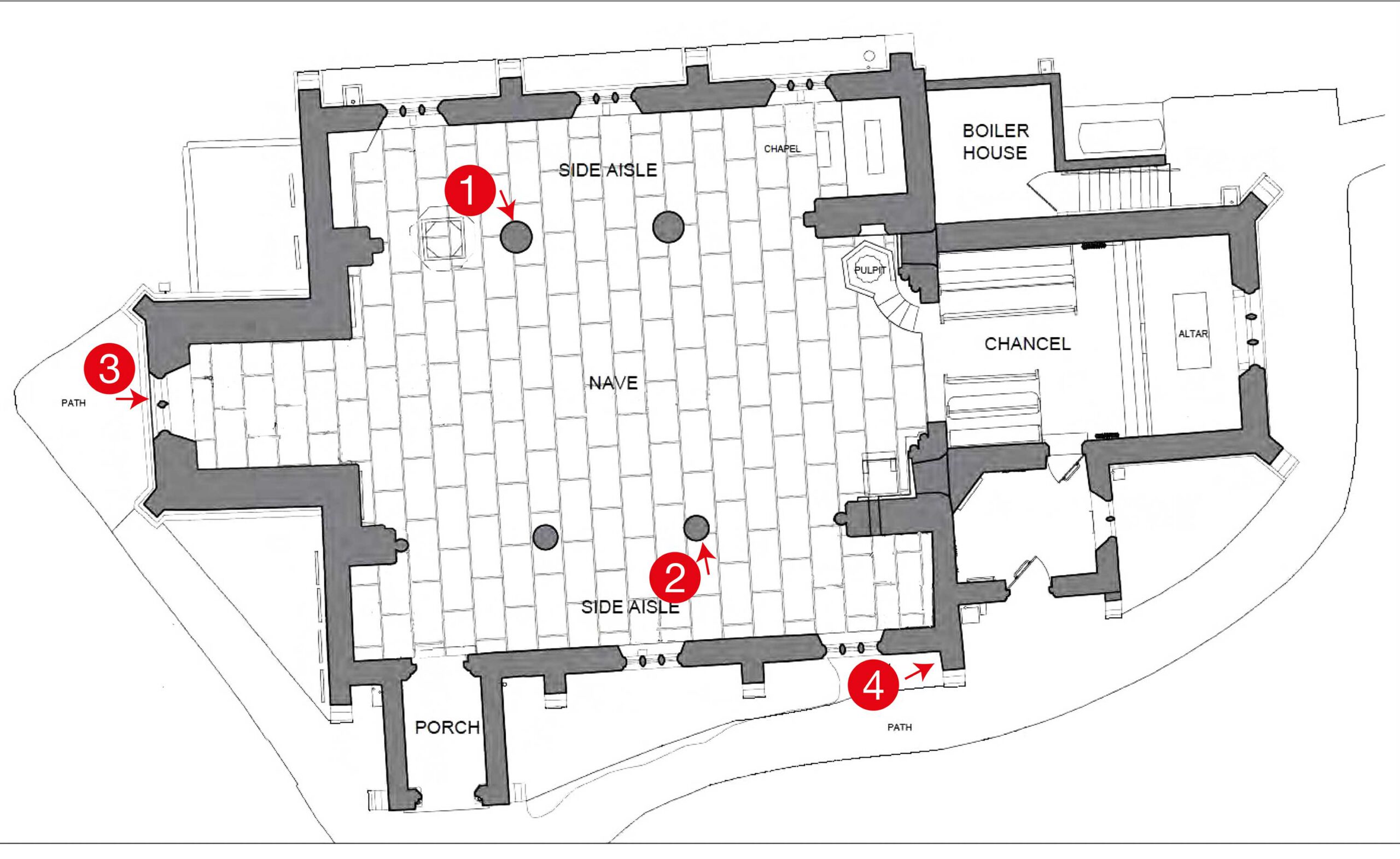
Here is a plan of St Mary’s church with a selection of the different marks we have found both within and on the outside walls. They are diverse in complexity and age. We are still in the process of interpreting these marks.
Click on an image to return to the map.
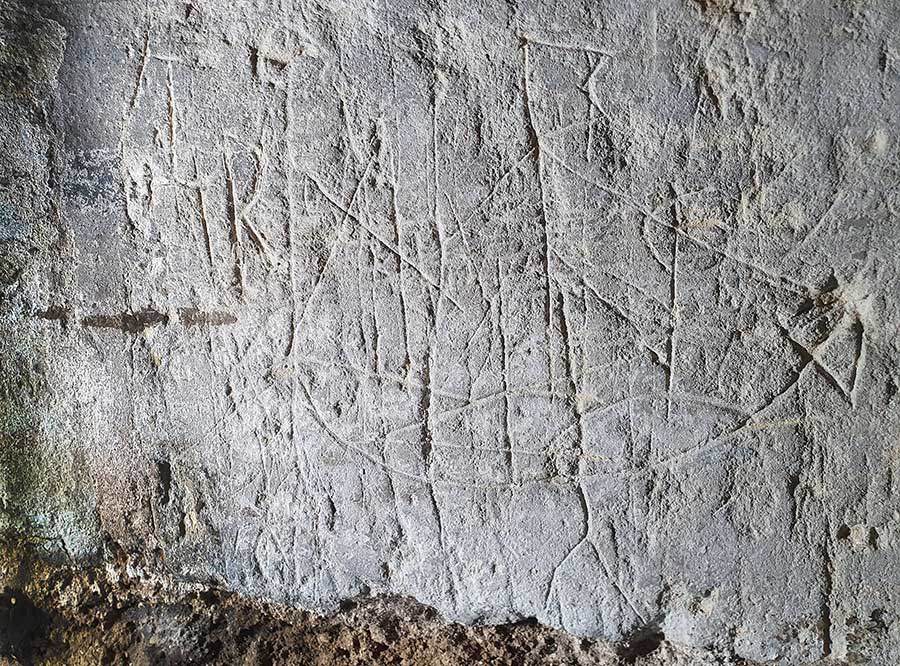
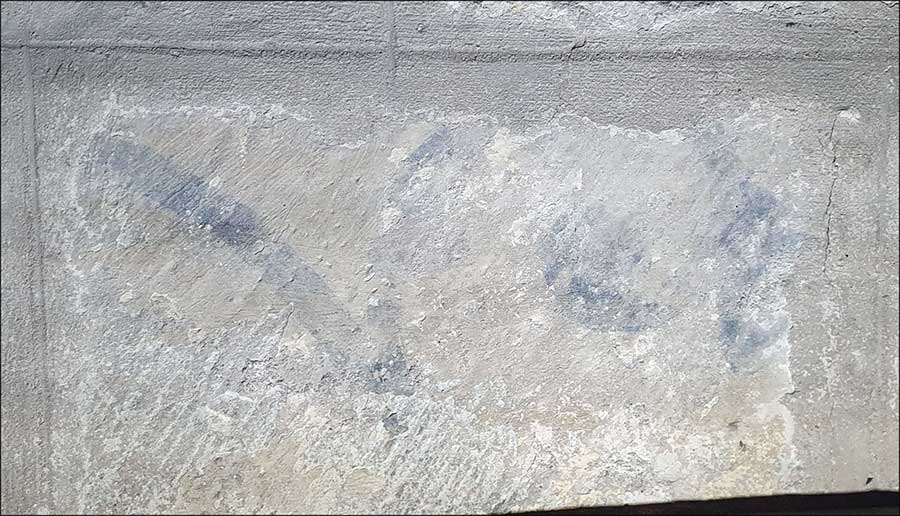
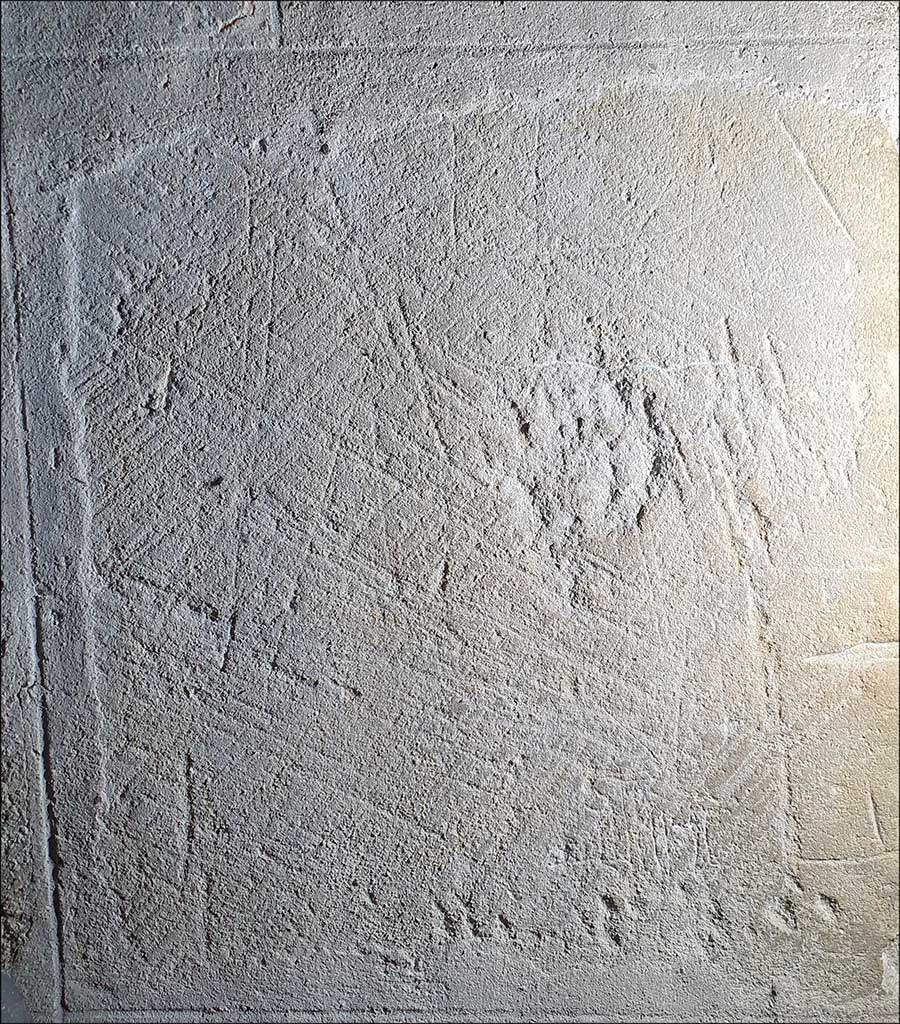
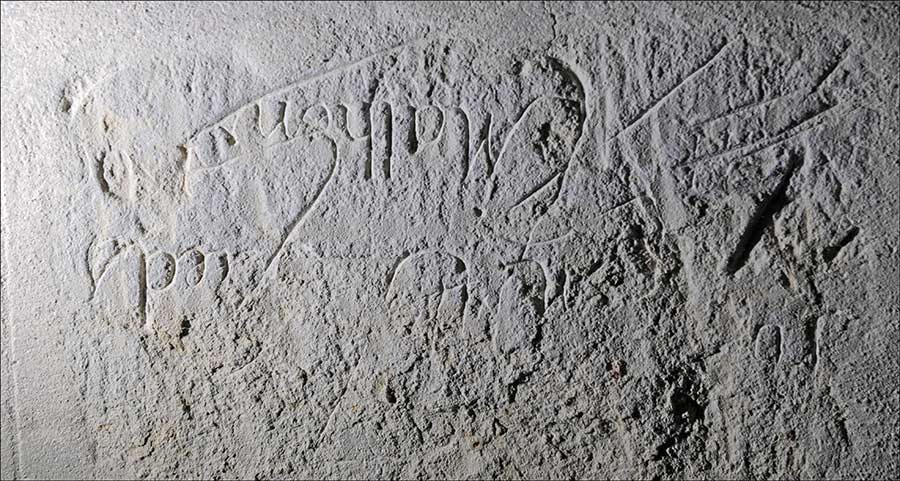
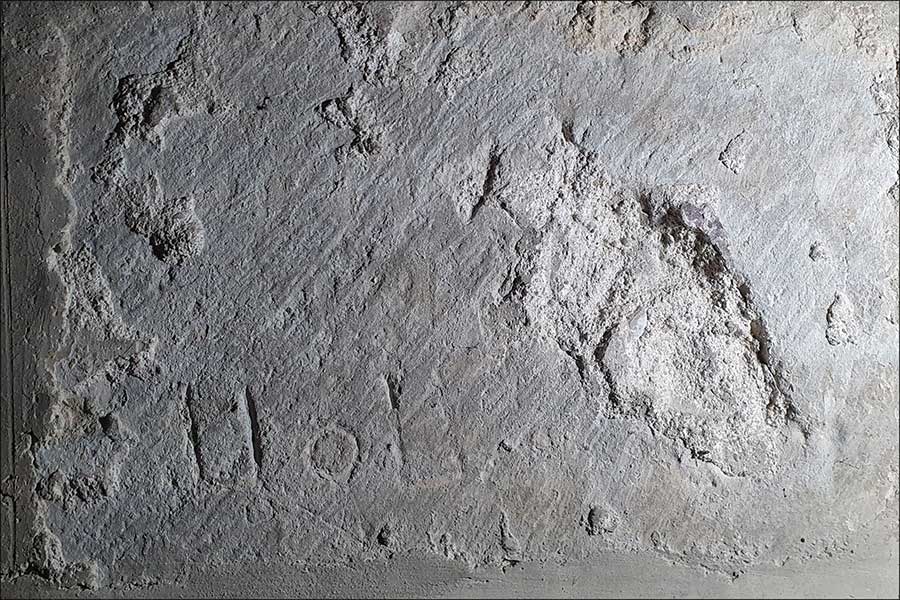
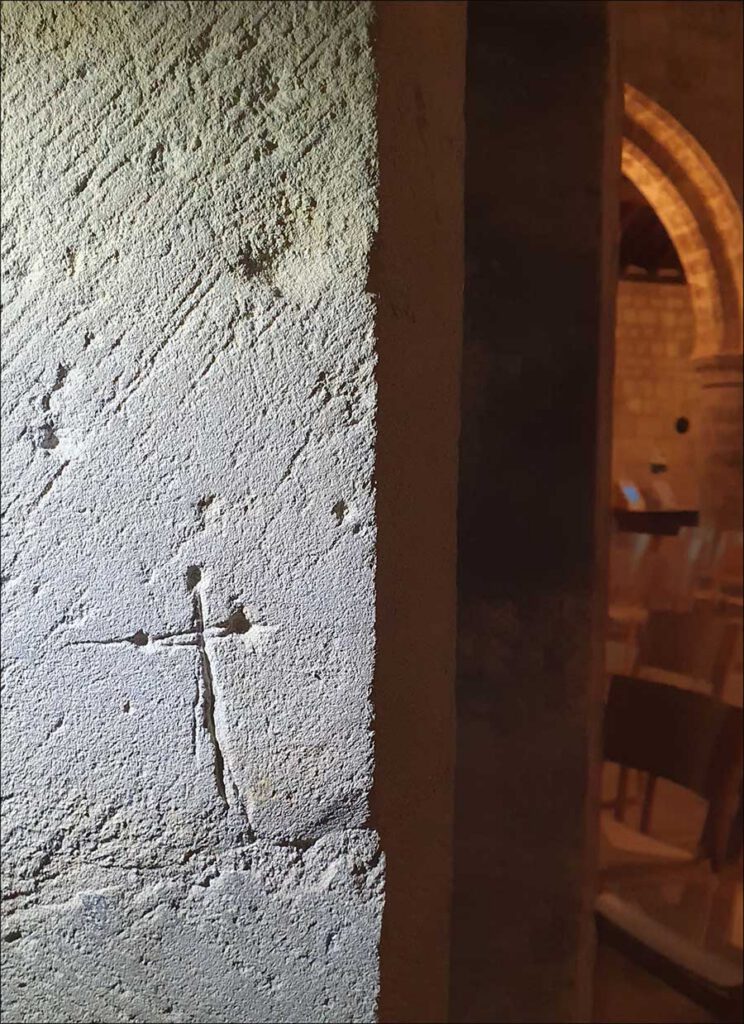
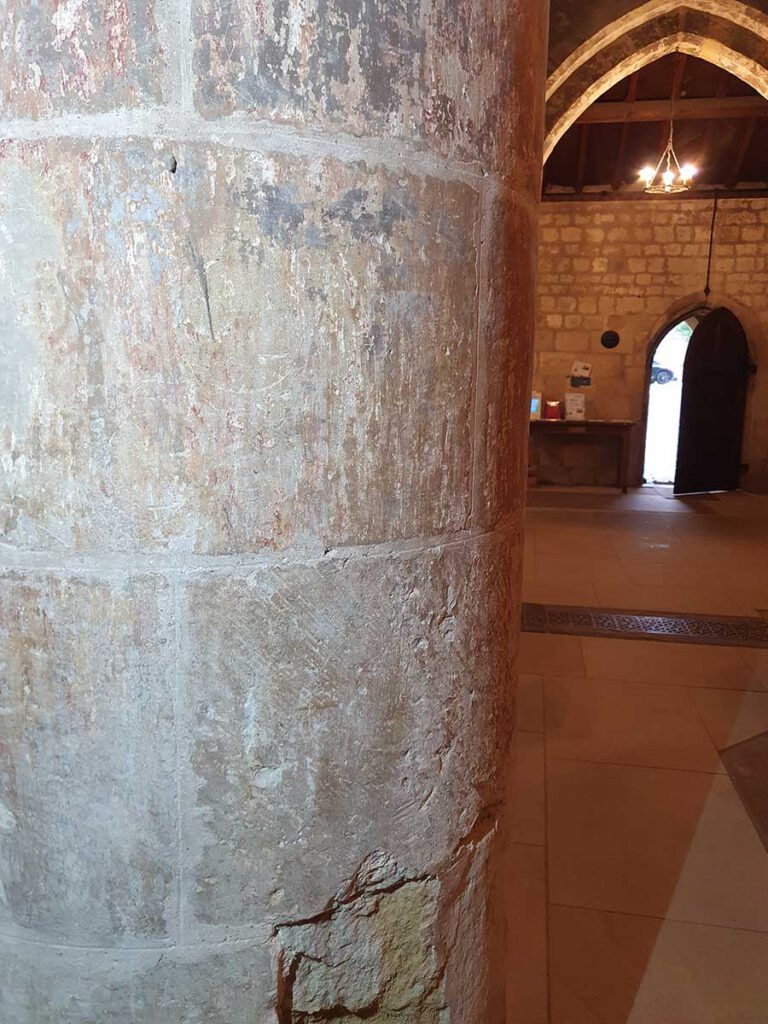
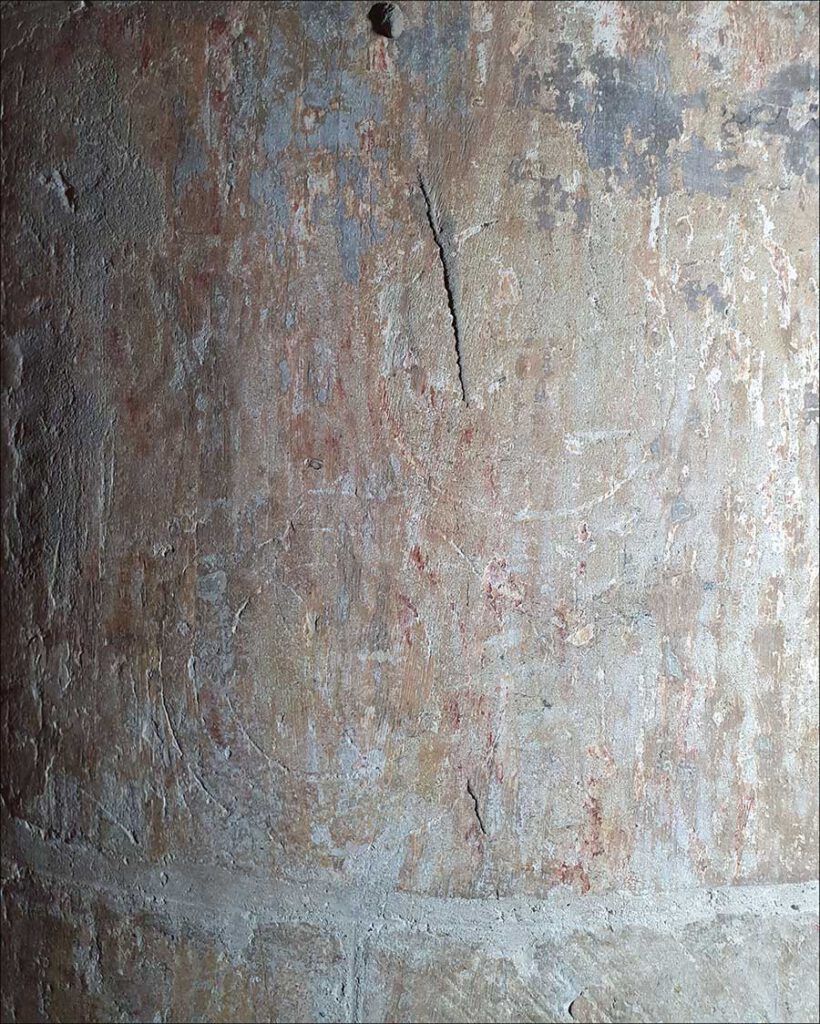
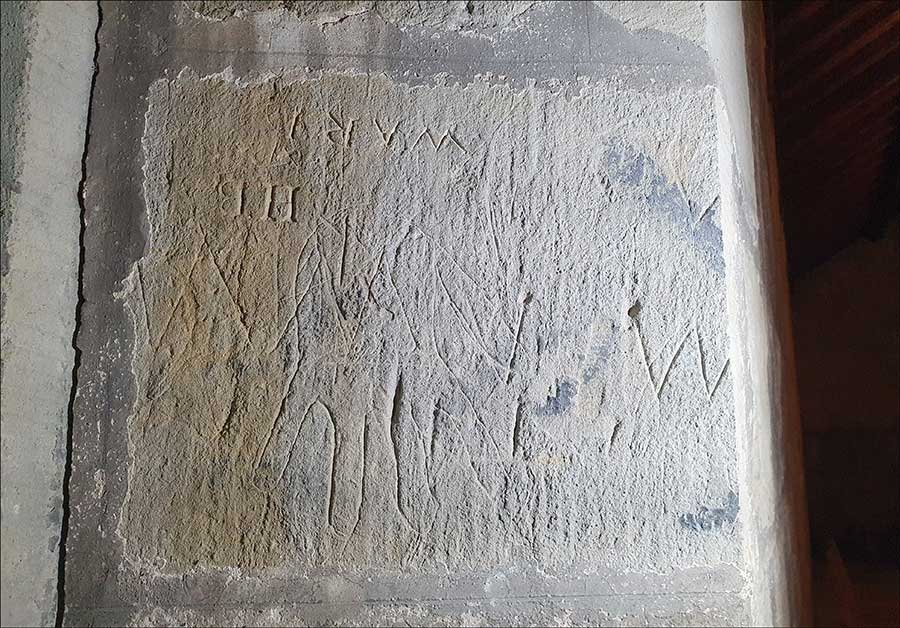
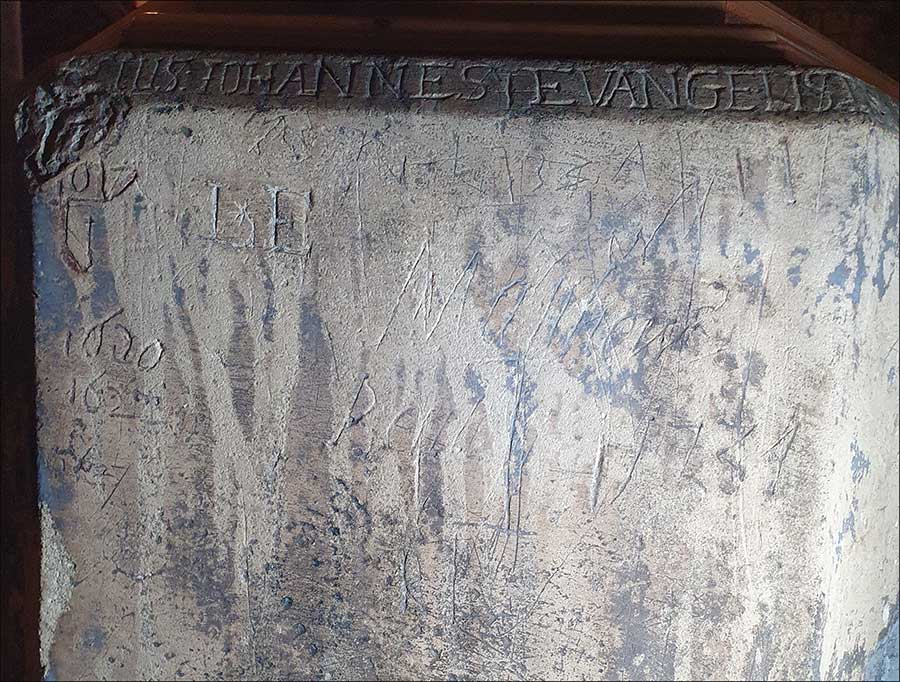
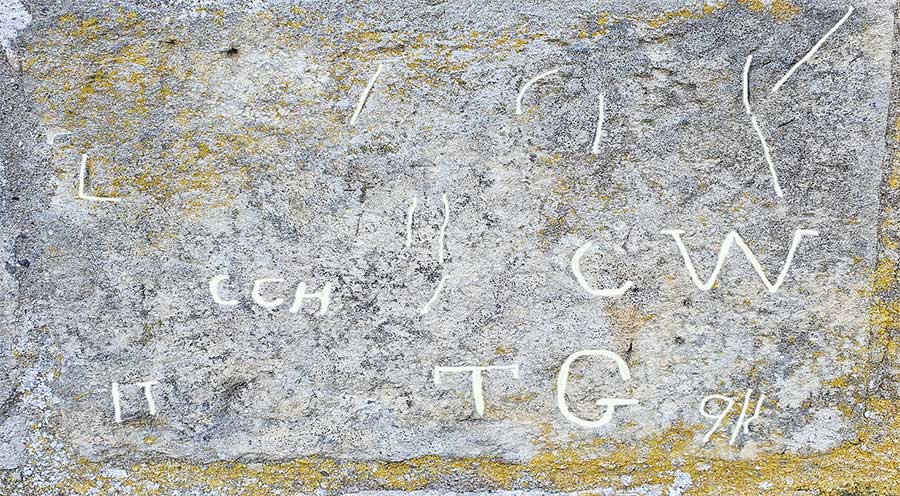
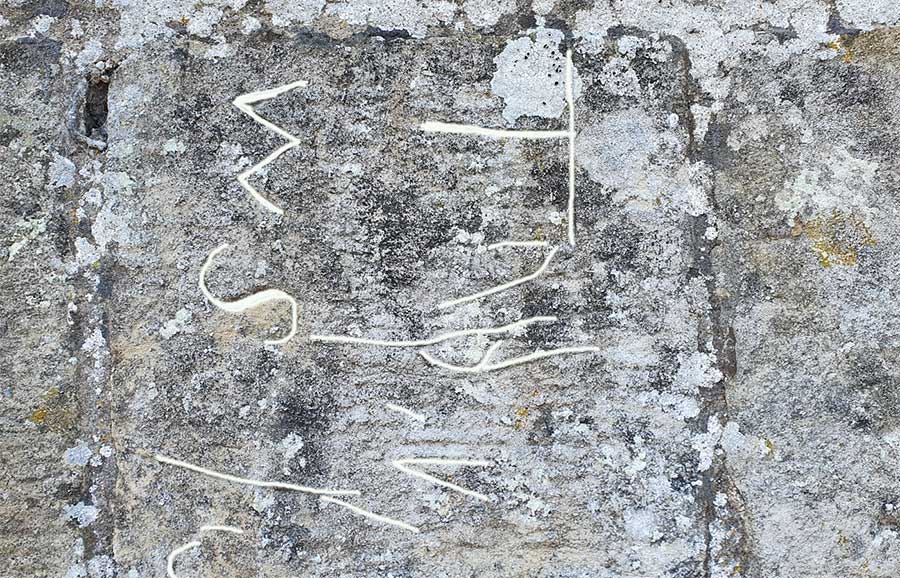
The East end of St Mary’s offers an interesting selection of marks of various styles and eras in which they were made. Facing away from the village these marks could have been created undetected. Some have obviously had more time spent on them than others. The placement of the individual stones also leads the viewer to think they may not be in their original location. Some of the marks appear to be in a different orientation to when the writing was added.
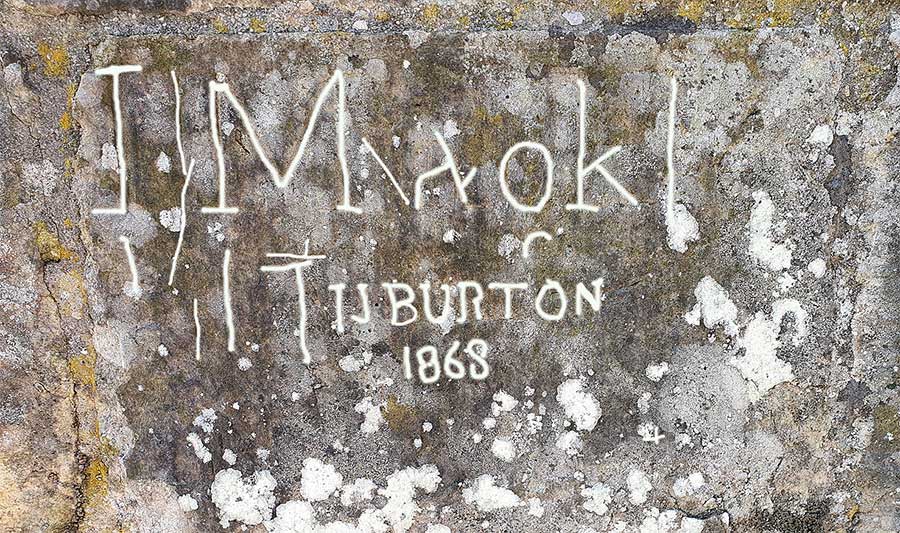
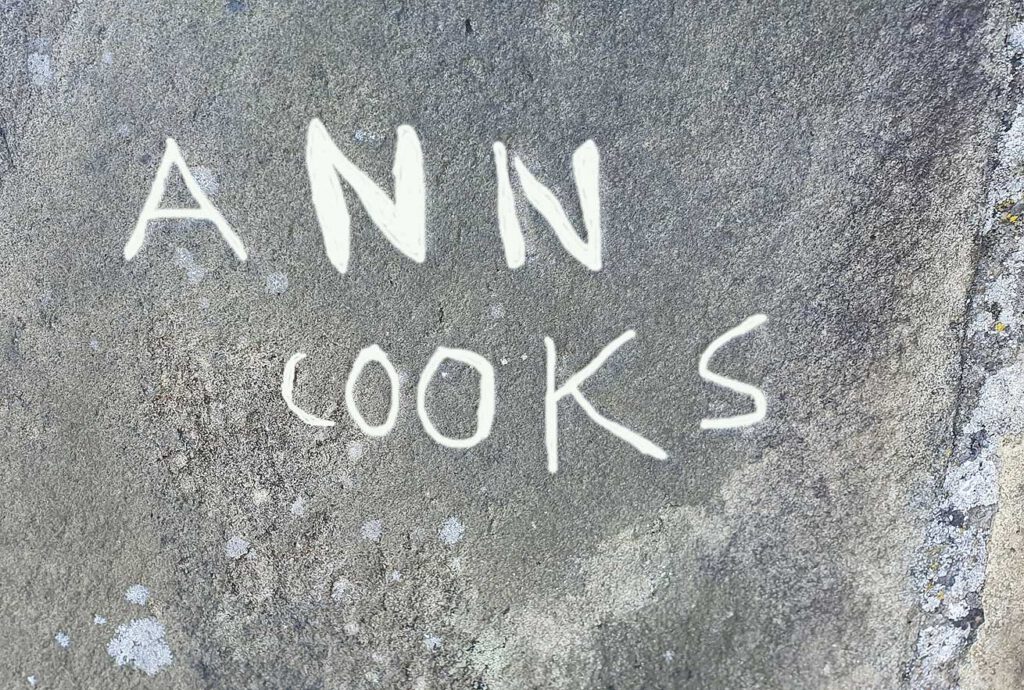
Here are a few examples of the marks on the east end of the church.pic 7. T J Burton is helpfully dated 1868 which makes investigation into its origins easier. Ann Cooks is a little more prosaic in style yet a delve into the church registers reveal family connections and a short life lived and a poignant passage in the records “Pause youthful reader over these records of early deaths and enquire should I be thus summoned in early life, am I prepared to meet my…” There is an Ann Cook recorded as dying in 1831 age 9. Perhaps her name was subversively etched on the church wall by a relative in tribute to a lost sister, child? A lasting memory on a perceived sacred building.
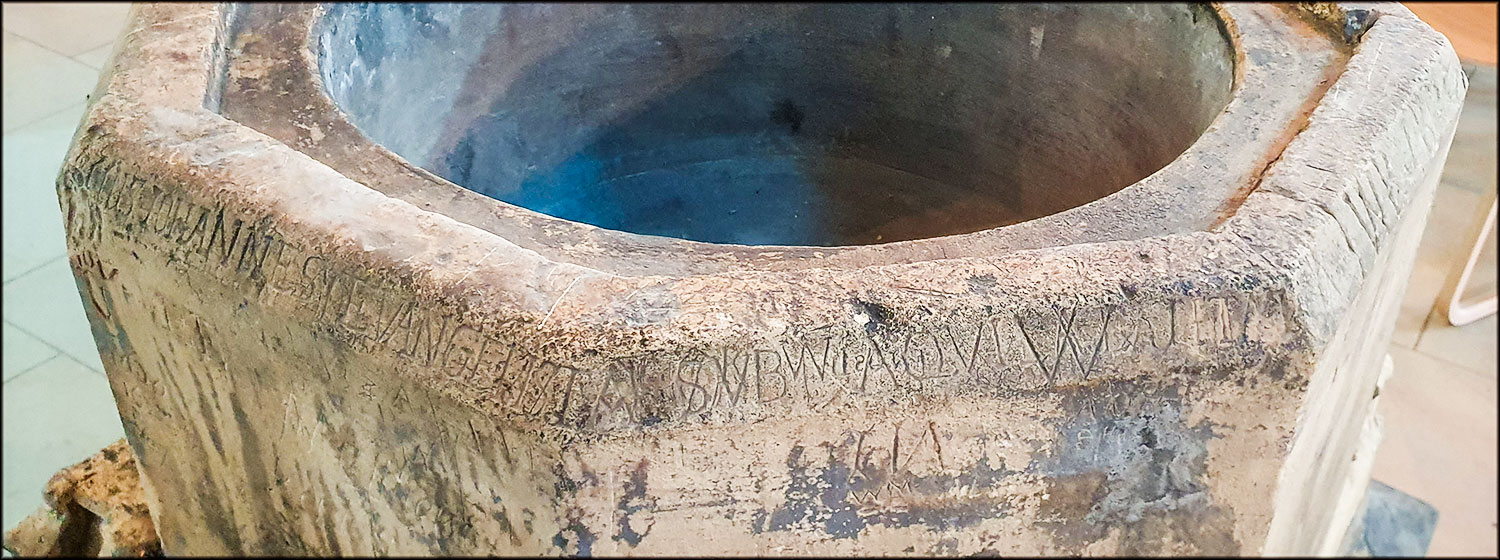
The font (recently relocated) is thought to have originated in the 15th century. It is an amalgam of styles and is thought to have originated from another unnamed church.
The rim of the font is heavily carved. It may be dedicated to St John the Evangelist withJohannes Evangelistacarved into it. Each face of hexagonal font is marked. It has sustained quite a lot of damage over the centuries.
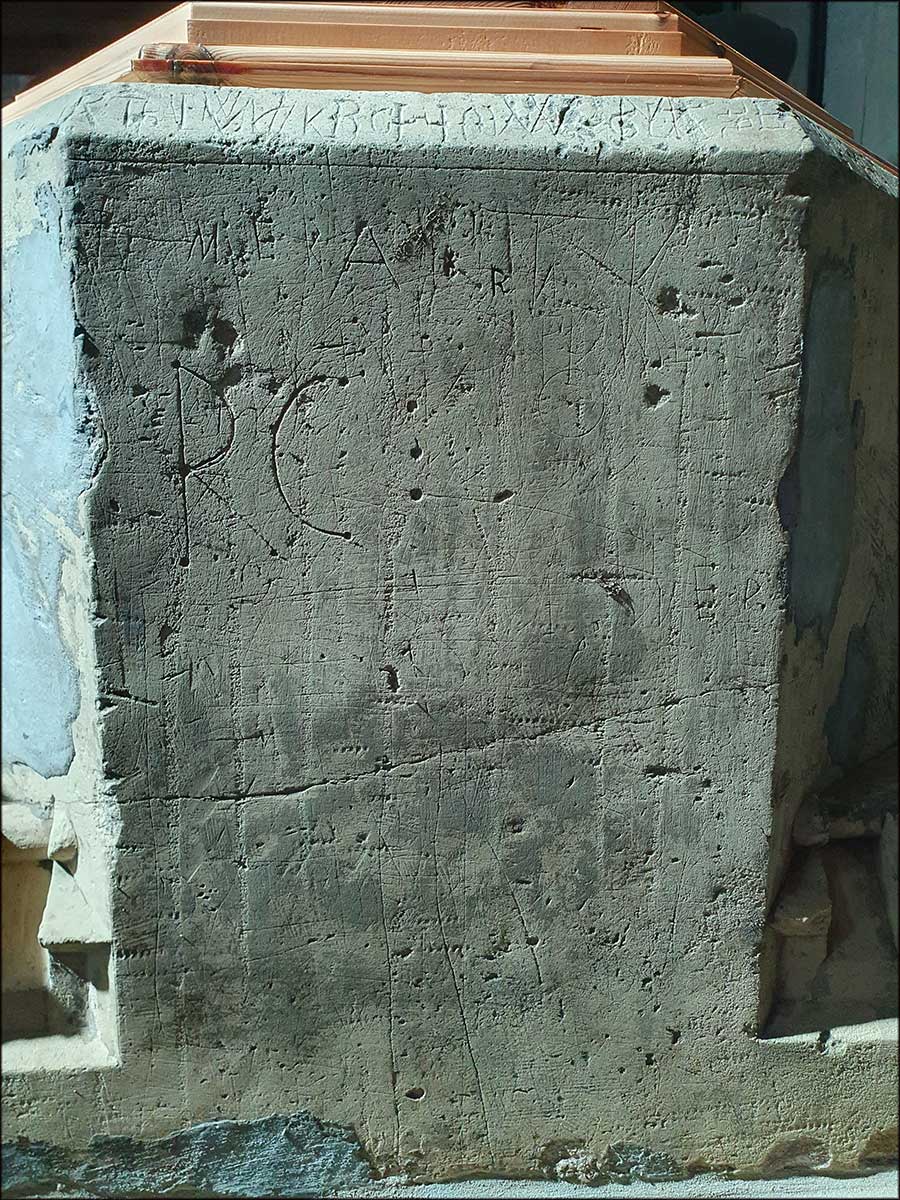
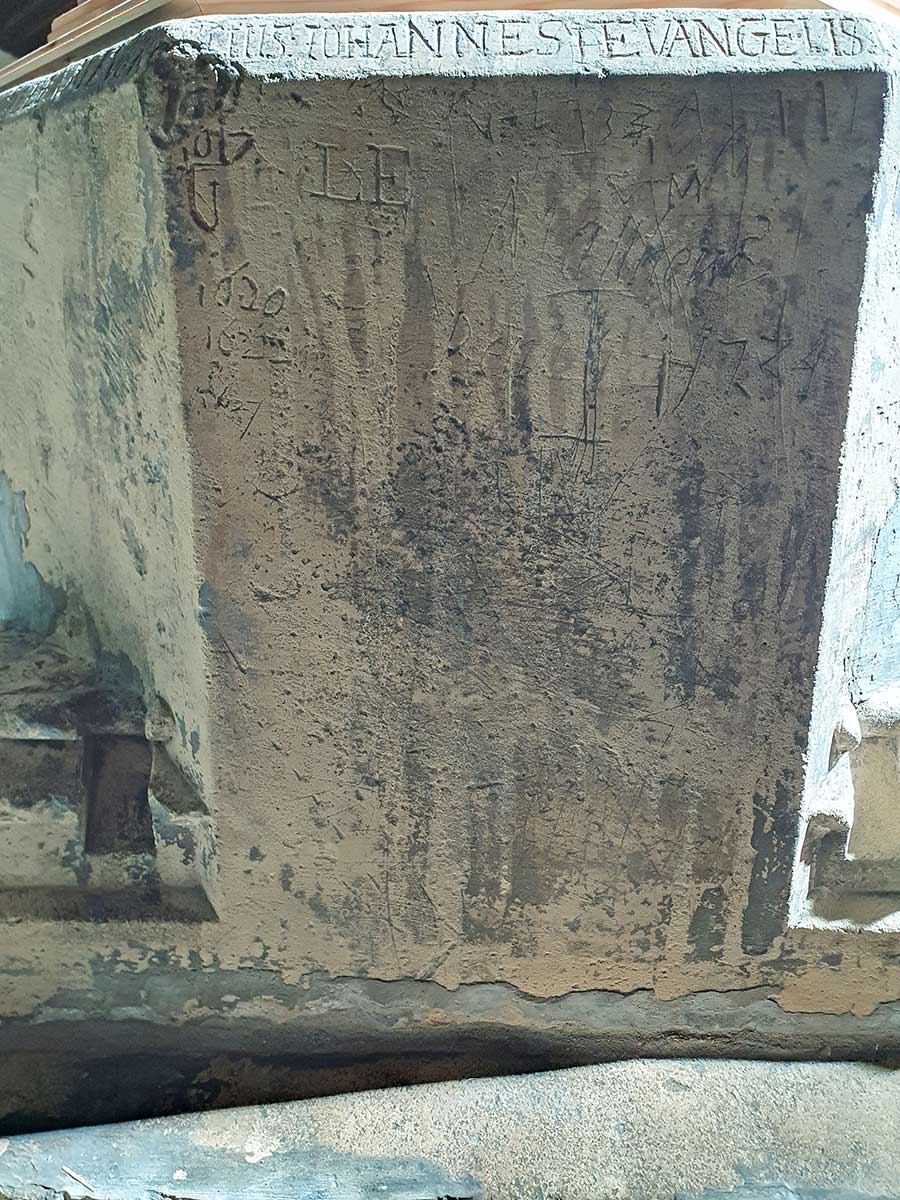
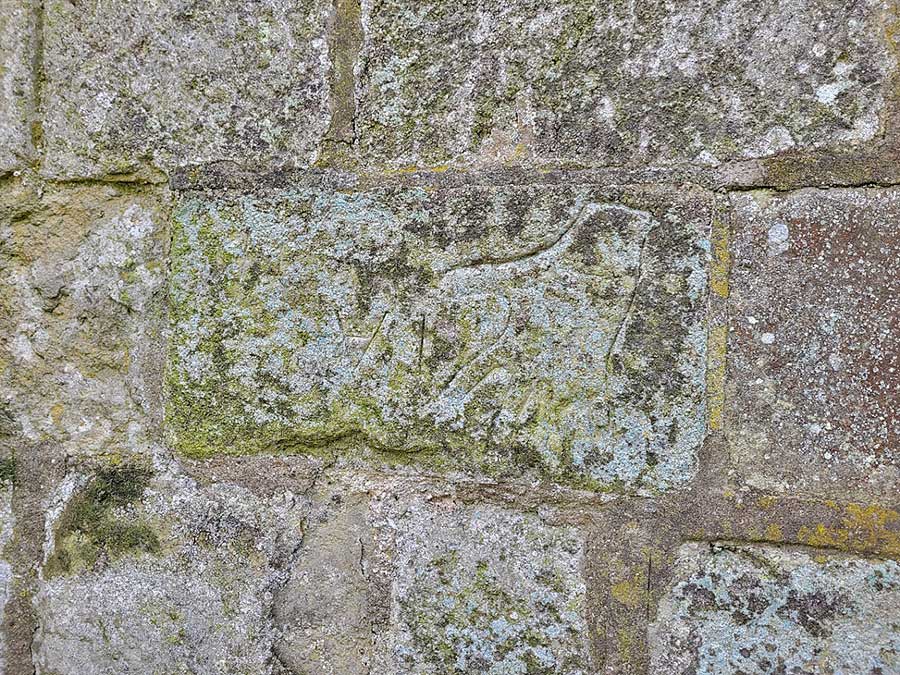
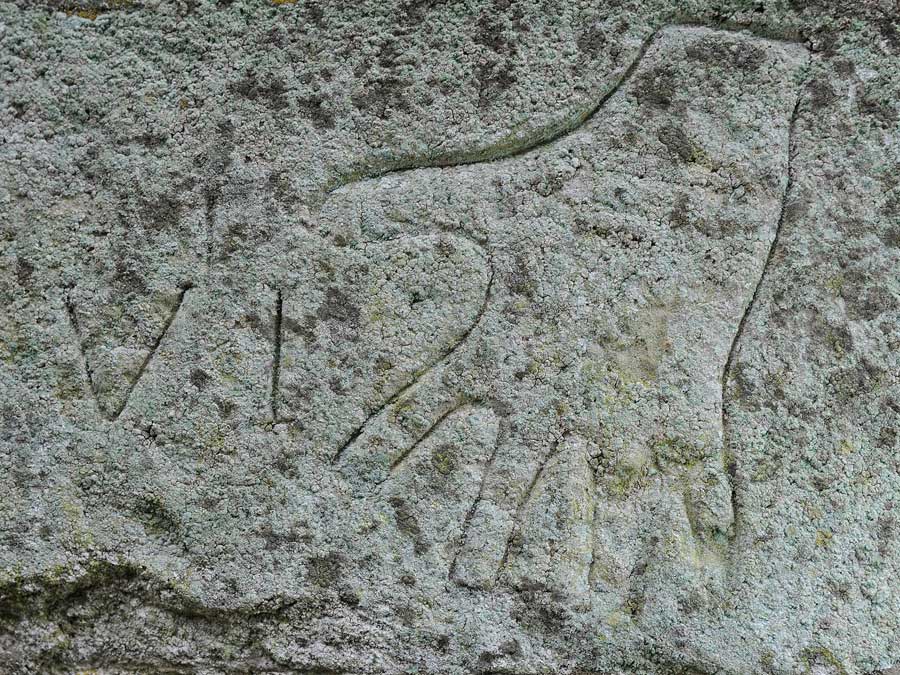
Not all markings are made for protection. Some may have been made as memorials or even in protest of historical events. Hand outlines are commonly found carved on the walls of older buildings. The reasons for these are many and varied. Interpreted as the simple motive of “ I was here” to the other end of the spectrum as a protest vote, holding the hand up to support or condemn.
The hand drawn on the north facing outer wall of the church (out of sight of the village) has been interpreted as a Catholic protest. To the left of the hand is carved HENRY VI and the hand has stigmata marked into it. The king for some centuries was considered by some loyalists as a Yorkshire saint.
Consecration Crosses
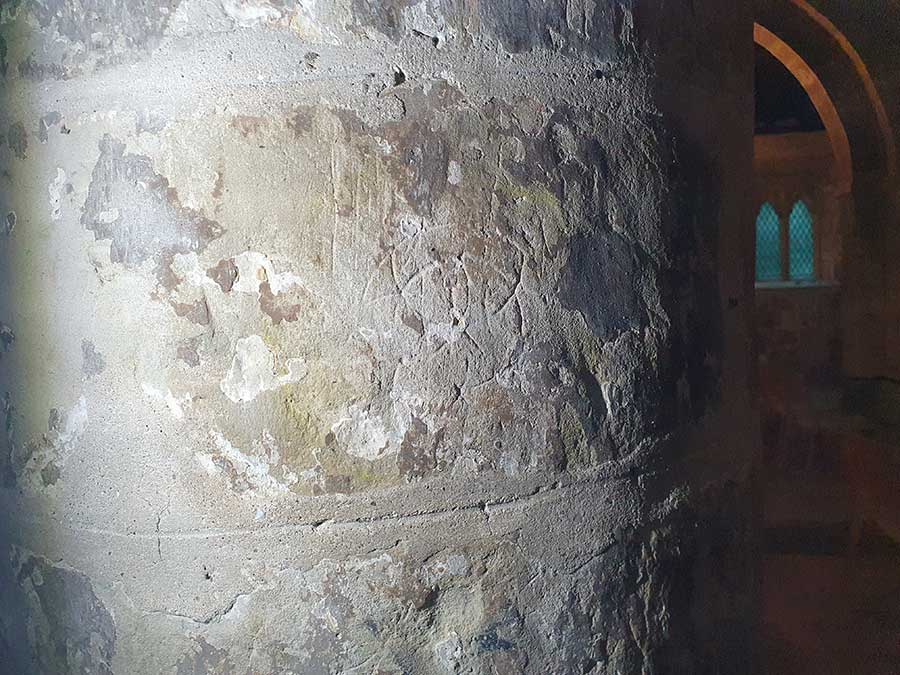
Found in many churches, consecration crosses, thought to be compass-drawn, originally can be traced back to when churches were first built. A local bishop would perform the ceremony of consecration by anointing the building with holy oil. Traditionally 12 times inside and twelve times outside. The walls would then be marked with a painted or carved cross.
Also known as daisy wheels or hexfoils, the consecration marks are made using a compass by a stone mason. It can have a series of curved intersecting lines within the circle. Found also on fonts and even in barns and domestic settings, they are thought to have a protective purpose.
Consecration Marks Map
The organ screen
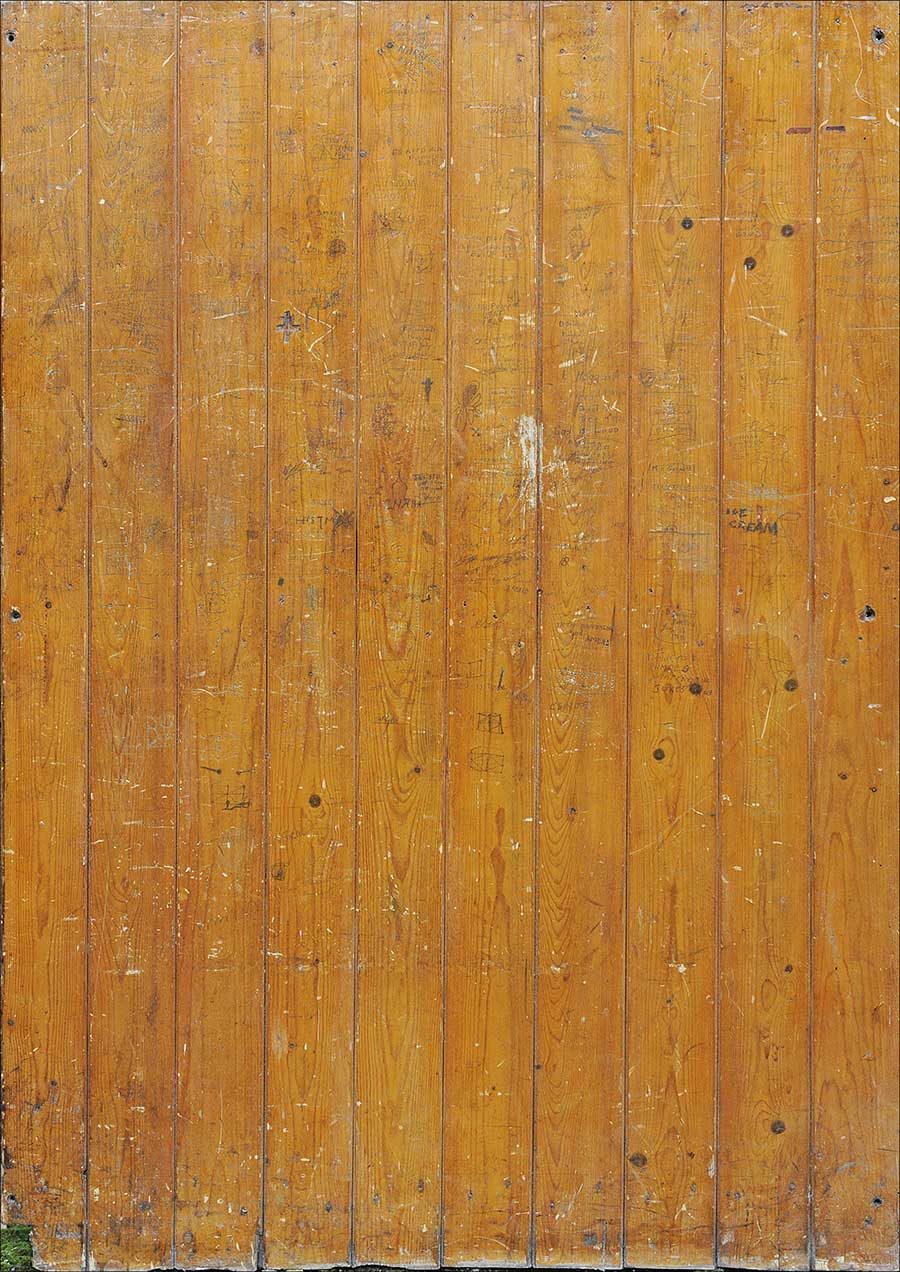
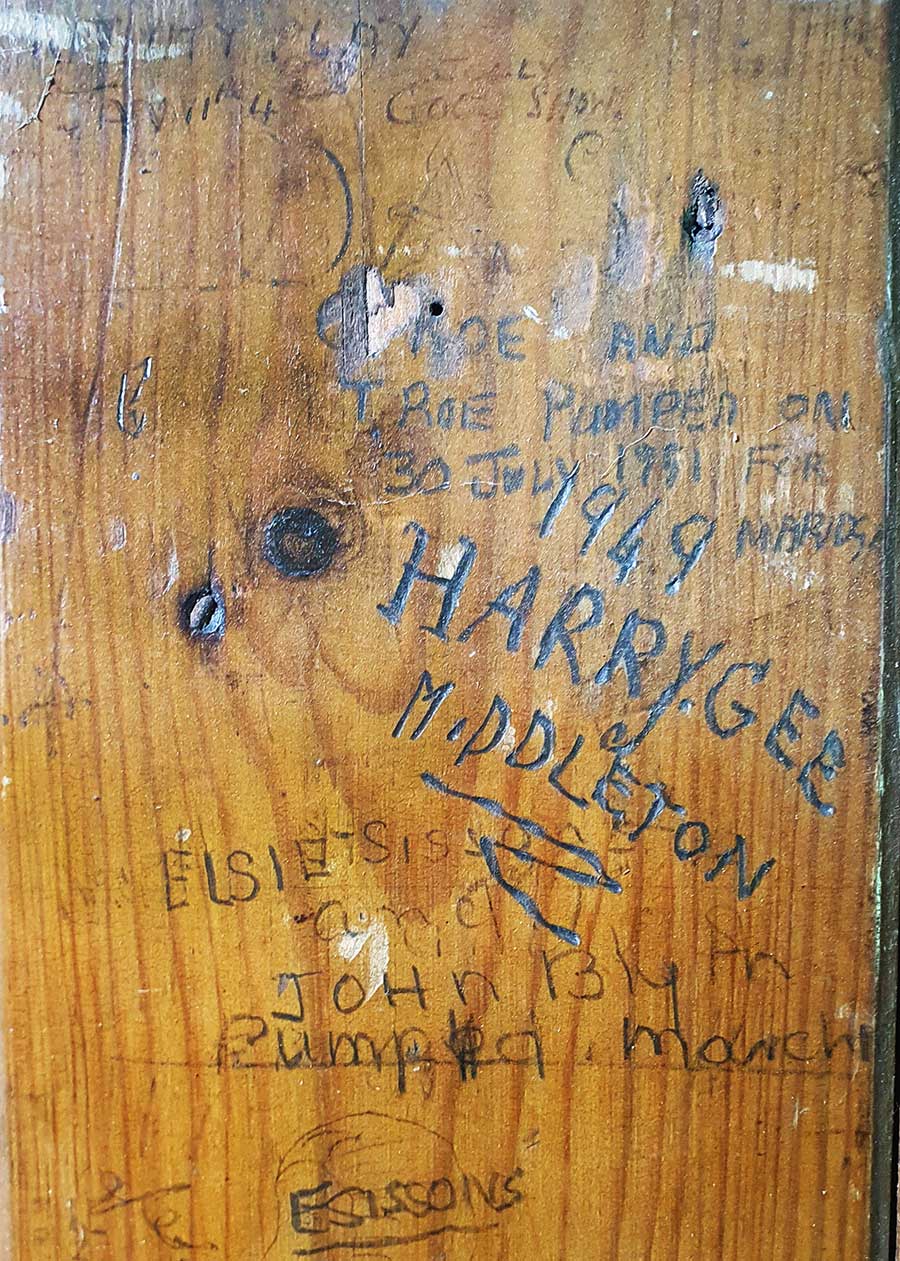
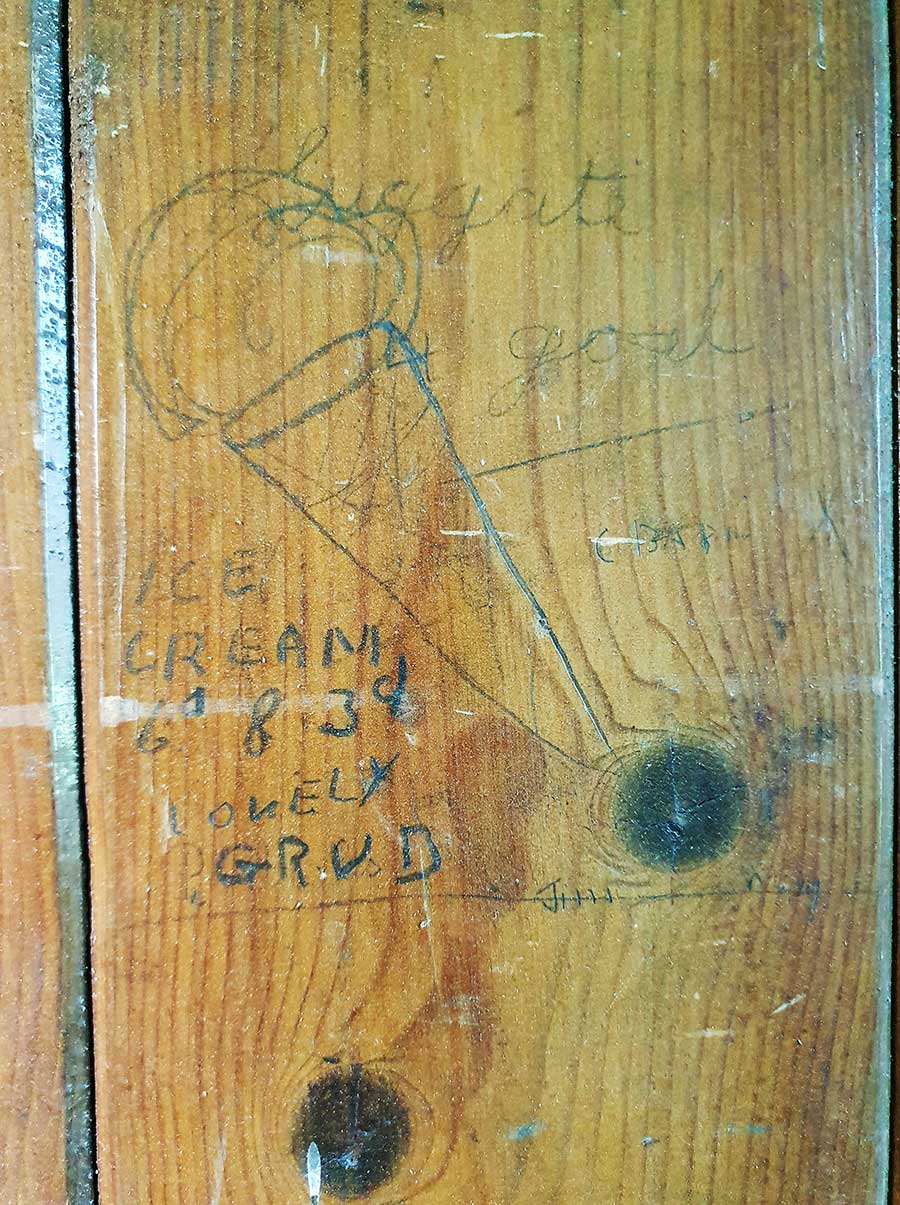
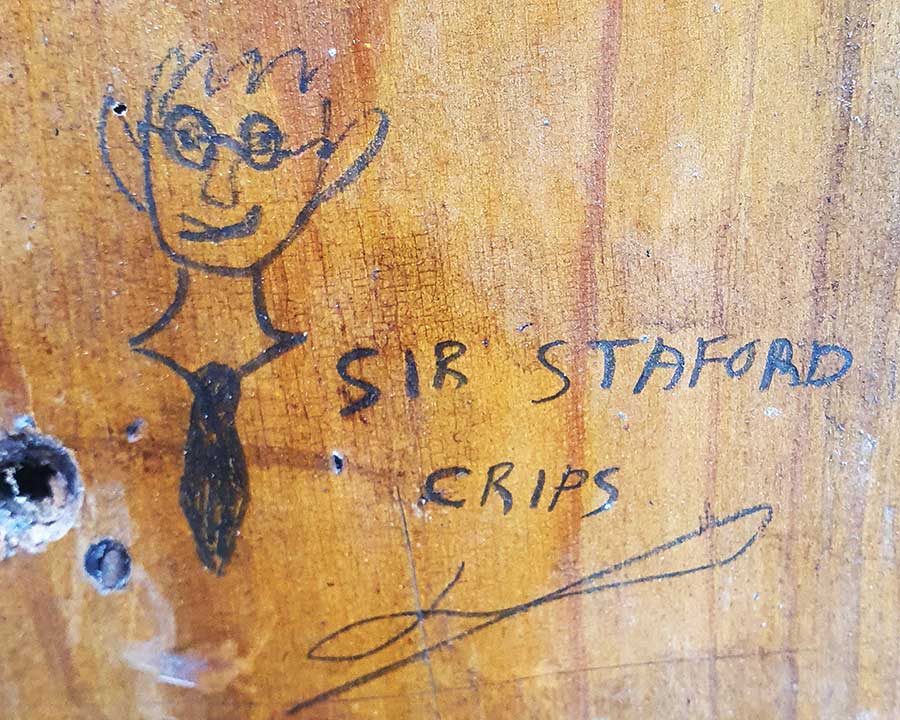
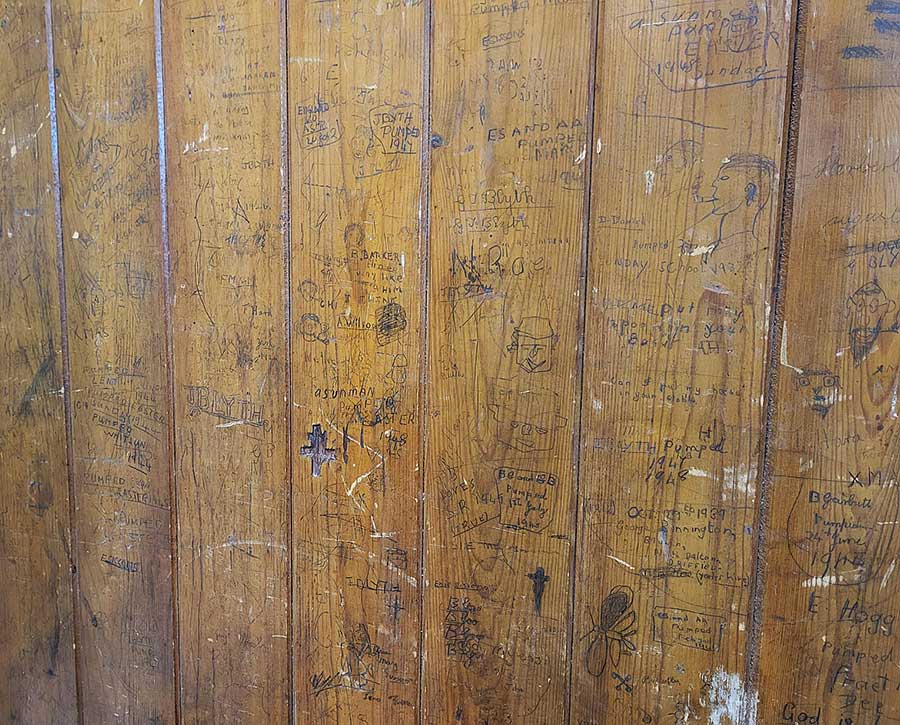
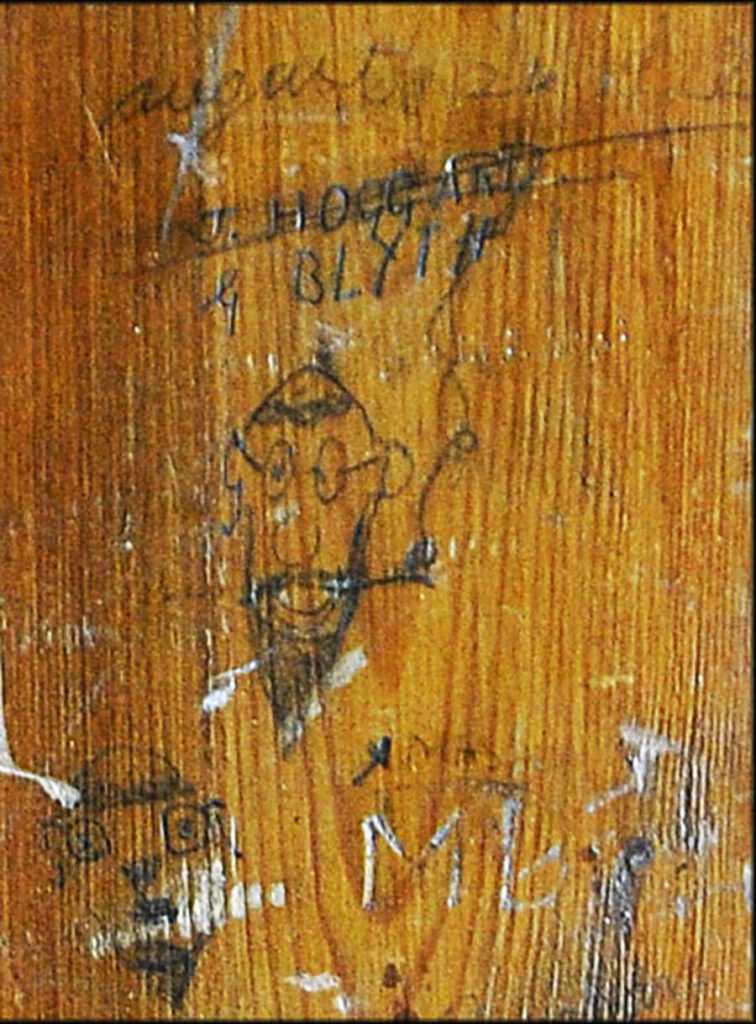
The organ screen represents a much more recent example of church graffiti. Situated out of sight, this mid 20th century relic displays images very much relevant to the time the images were drawn.
The organ in St Mary’s was removed in 2016 after repairs were deemed too expensive. Along with its removal the wooden screen behind the organ was revealed along with decades of scribbling’s.
The organ required air to be pumped into its mechanism in order to produce sound. This undertaking was tasked on whoever was willing or encouraged from the village, and it appears surrounding countryside, to do it. This assignment usually fell to teenagers, who it can be speculated weren’t over enamoured to be sat in a confined, noisy space listening to the Sunday service, whist ‘pumping’ the organ. The screen, they sat at the side of, probably provided a happy distraction especially if they remembered a pen, pencil or pen knife.
The graffiti is a fascinating insight into the middle decades of the 20th century. The dates etched into the wood give much food for thought, knowing now of the geopolitical upheavals about to happen and being lived through. Some of the authors may still live locally or at least their children.
It is with hindsight that we view and try to understand graffiti. In analysing the more ancient marks in the church it is a little more difficult to interpret the author’s motivations without the knowledge and insight of the times they were written in. Unlike the organ screen that at least the more senior members of the village may have actually contributed to.
When considering the motivation for writing the graffiti on the organ screen we perhaps should bear in mind that human behaviour through the millennium has probably changed little in respect to boredom threshold and the fondness for scribbling. Just the instruments used to add the marks has changed. We can interpret the organ screen drawings using the same criteria that we look at the more ancient marks. The need to be remembered, to be immortalised or in remembrance of someone else and perhaps to a lesser extent now, acts motivated by superstition. The marks can be a protest to a perceived injustice or a warning to readers in the future. So, when interpreting the marks on the church organ screen it can be considered as valuable as any of the other marks found in and around the church, despite it being created relatively recently.
The value we give to ancient graffiti begs the question…Would we be quite so tolerant today if someone chiselled at the church walls or spray canned their hostility to the vicar’s scruples in the chancel….probably not!