
The Carvings and Gargoyles of St Mary's
The Carvings
St Mary's church is in the top 2% of buildings in the country listed for its exceptional historic and architectural interest. Particularly special are the 12th century nave and north and south arcades. The remarkable survival of the 12th century decorative and carved stone, according to Historic England, is the reason for the Grade 1 listing.
It is difficult to date when the 2 carvings were introduced to St Mary’s. It is believed that the south aisle was added c1210 after the north aisle c1190 (according to Petch). The quality of construction seems to have advanced over the period of the churches alterations and enlargement. Not only were carvings added to the end capitals but detailing was added to the tops of the pillars, which themselves are finer in construction. These details are described in the Corpus of Romanesque Sculpture in Britain and Ireland (CRSBI).
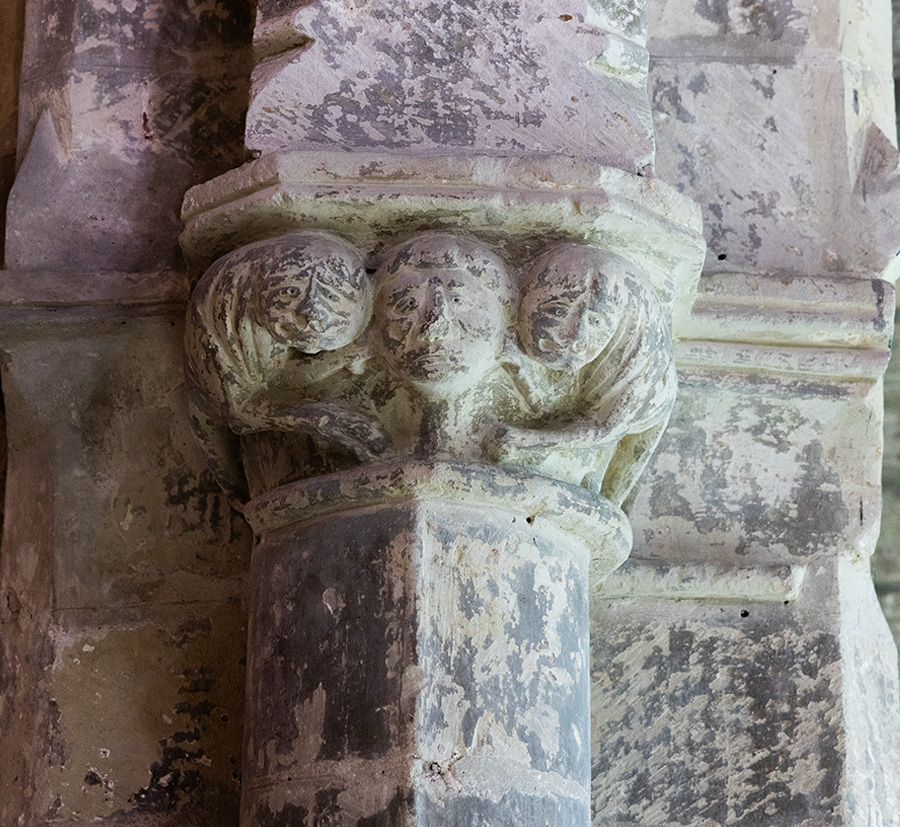
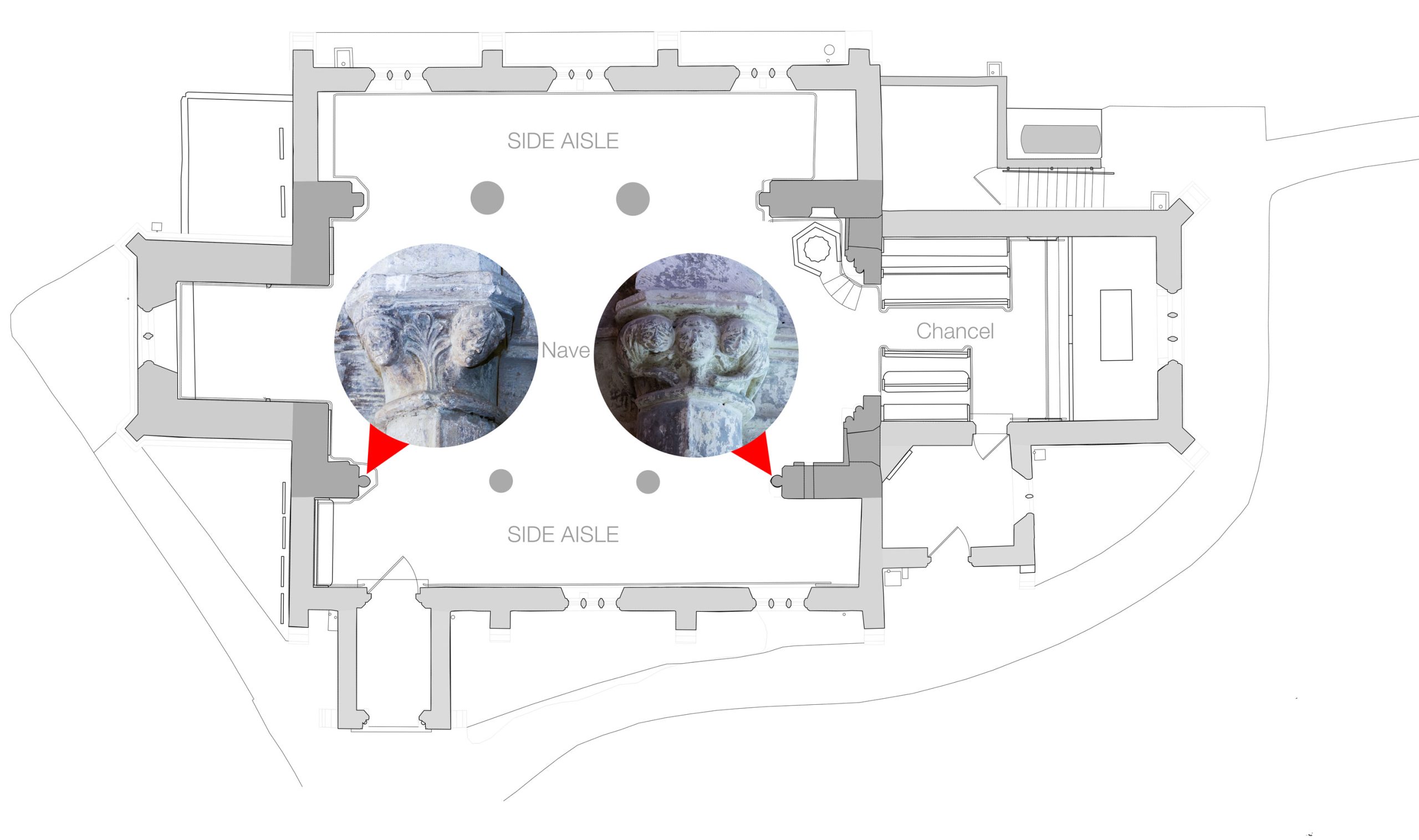
In the south aisle arcade in St. Mary’s Church, three out of the four capitals have carvings on them. One is on the respond – the half-pillar which supports the arch – which joins the easternmost arch of the south aisle arcade to the chancel wall. It depicts a man flanked by two lions, each with a paw resting on the man’s face.
The Chancel Arch
The chancel arch is one of the earliest features of St. Mary’s Church, dating from the twelfth or possibly early thirteenth century. There are three orders – an outer, middle and inside arch - in the rounded arch with columns displaying scallop capitals, one with a volute or spiral-shaped design.
The Southeast Respond Capital
A man’s head, flanked by two lions with their paws resting on the man’s face, looking to the west. The lions have odd small round ears, their manes are long streaks of hair between the man’s head and their front legs. All their expressions seem apprehensive, with eyebrows raised slantwise.
The West Capital
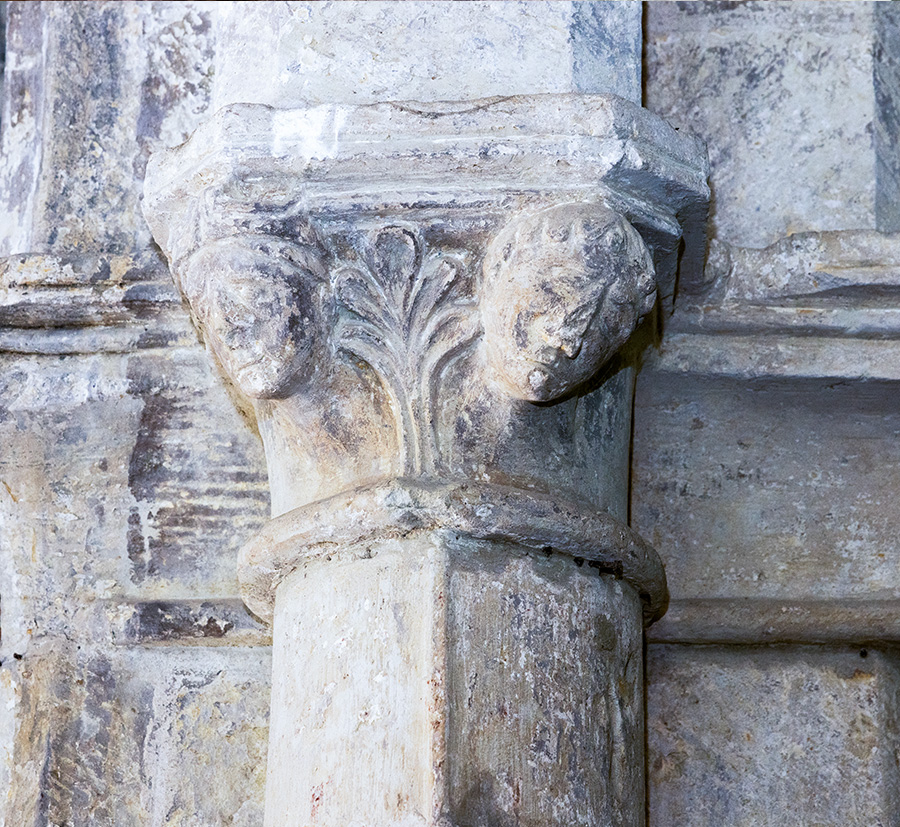
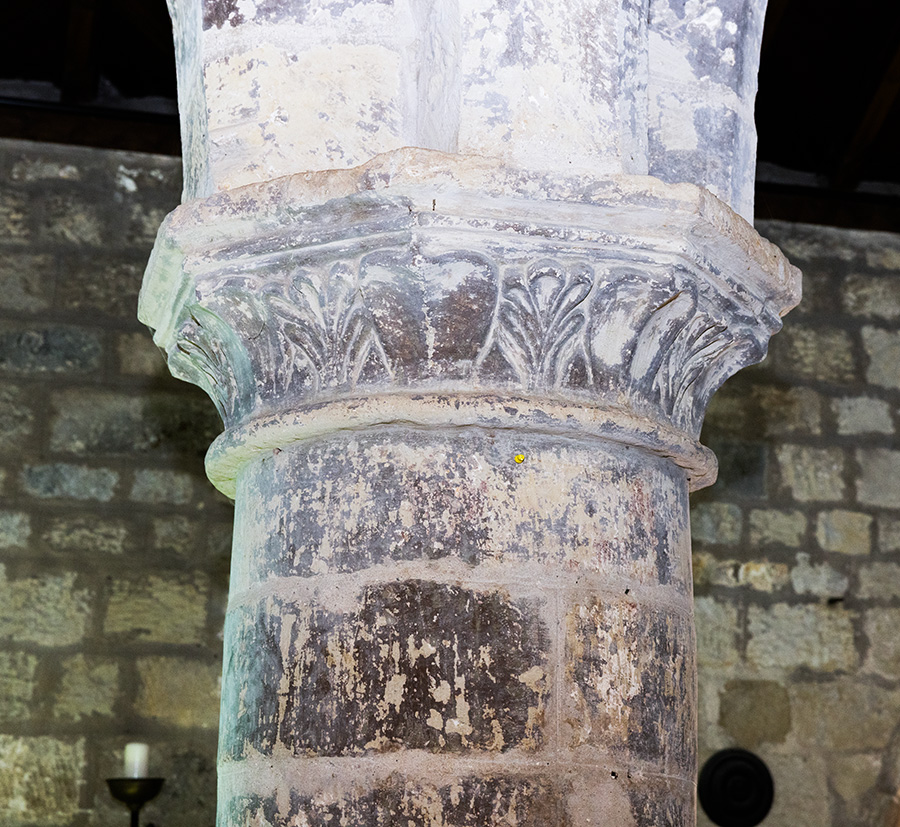
Has two heads, both appear apprehensive. The east face seems to be that of a crowned woman and the head on the north-east is that of a young man, similar the face, on the east respond capital. Between them is a foliate motif like the fluted leaves on the capital of the first column.
The Arcades
The arches are pointed in Transitional style in contrast to the Norman Chancel Arch, as they are quite close in date it shows the rapid shift in architectural styles. The pillars on the north and south side are significantly different in design and size. The north aisle pillars are simpler and pre-date the south which has more detailed design with carvings on three of the four pillars. The foliage on the first pillar on the south side is a symbol of life in heavenly paradise.
Gargoyles and Grotesques
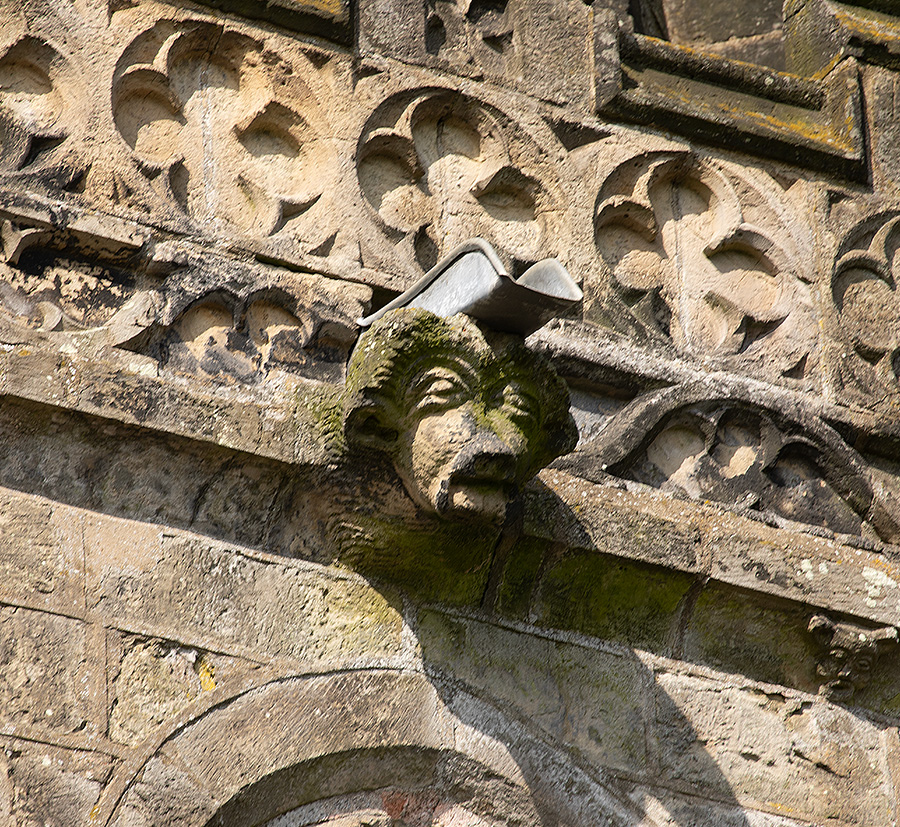
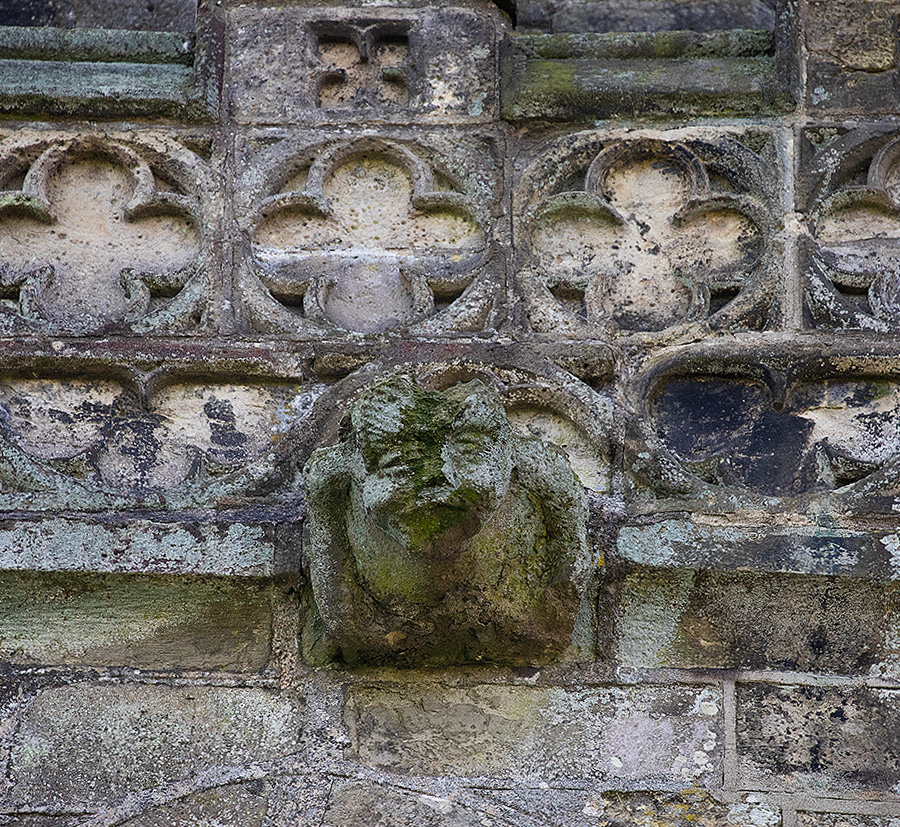
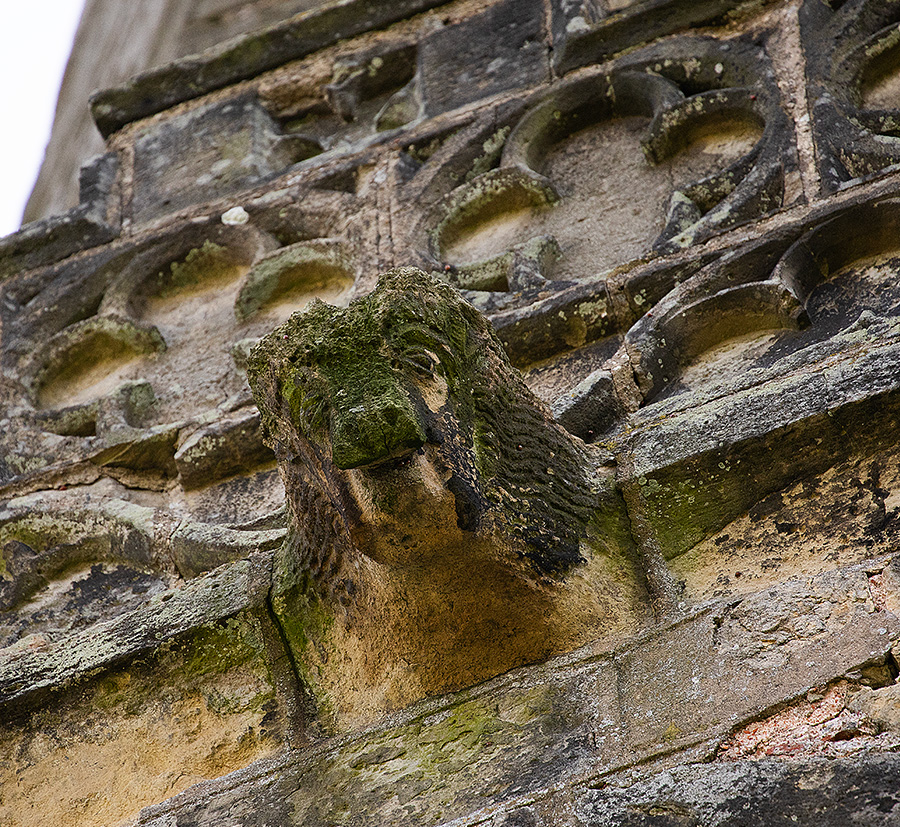
Gargoyles
Gargoyles serve a purpose and are a carved stone extending from the tower with a spout usually from the mouth designed to convey water from a roof and away from the church. They spit water out to preserve the stonework of the church. Originally from the Latin gurguilio which means throat and words like gargle, gurgle gully and gutter are derived.
Grotesques
Gotesques are the decorative carvings around the parapet of the tower and consist of a range of creatures often ugly, unnatural and imaginary. Why there are so many strange carvings on the tower is a mystery and there are no records. They were thought to ward off evil spirits and offer protection or to teach biblical lessons. They are hard to identify and you might need a pair of binoculars.
William Golding in his 1964 novel Spire described gargoyles as they “yelled their soulless blasphemies and derisions into the wind” when viewing the work of medieval craftsmen, be they stone masons or woodworkers, their creations often seem incongruous to our understanding of the role of the church in our society now. The motivation for the cleric mocking carvings on the misericords in our minsters to the sheela-na-gigs in parish churches have meanings we perhaps don’t fully appreciate today.
In his book “How to read a church” Richard Taylor writes the word gargoyle comes from the Latin gurgulio, meaning ‘throat’ a root shared with the word ‘gargle’. It is a devise by which rain is thrown clear of the church. It is believed that the evolution of the gargoyle fantastical designs were “intended to scare away the Devil or make a symbolic contrast between the bedevilled world outside the church and the sanctuary within”. . Richard Taylor goes on to say “ You have to be suspicious of symbolism in relation to gargoyles (and grotesques),since above all they gave opportunity for expression by local carvers, as their often-fabulous work- terrifying, comic, bawdy, macabre and rarely very ‘holy’- attests.
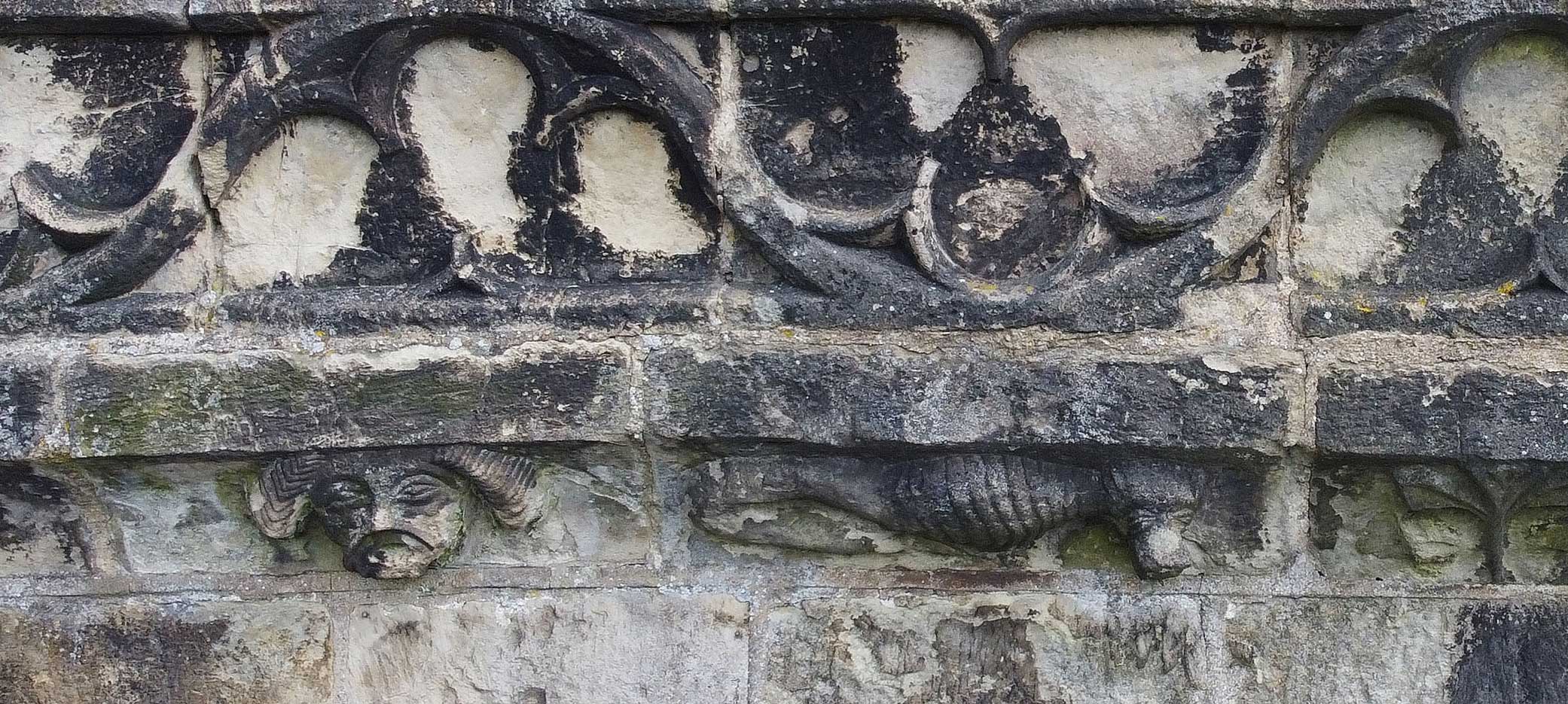
Stonemason Andrew Ziminski in his book “Church going” describes gargoyles fellow carved creatures Grotesques or ‘hunky punks’ as they are known in Somerset. These carvings don’t have spouts and are purely decorative. They are often carved in the form of crouching caricatures that cling vertically to a drip moulding either along a roofline or around a window.
St Mary’s, Huggate has its share of stone gargoyles and grotesque carvings, situated 2 thirds of the way up the tower, watching over parishioners as they walk toward the church. Central to each side of the tower are the gargoyles designed to allow water to run off the roof. To either side of the main faces are carved the smaller grotesques. These take the form of faces with distinctive hairstyles, leaves (possibly acanthus), a lion? On the right-hand side of the South face of the tower is what looks like a beaver. It is known that Huggate had an association with Beverley Minster in the 14th century In ‘Beverley Minster: an illustrated history’ Rosemay Horrox’s writes “ A Yorkshire man hailing from the village of the same name, Huggate appears in documents dating from the first decade of the 14th centaury, which show him to have been a royal clerk….He had risen by 1317 to be treasurer of the Prince of Wales-the future Edward III.-He was appointed Provost of Beverley ( Provost Nicholas of Huggate) in 1318 and by 1324 the royal receiver for Aquitaine and Gascony. Depending on his family ties, with the village Nicholas was born in, he may have influenced the development of the parish church in the village having access to the skilled craftsmen working on Beverley minster. The carving of the beaver may be a subtle reference.
The detailing on the tower carvings looks more refined than the earlier dated carvings within the church. The gargoyle on the West face of the tower looks like a boars head. The one facing south, seen as parishioners approach the church, is of a human face pulling their lips wide apart in a mocking gesture. The North facing gargoyle is heavily weathered but looks to include the torso and head of a person with arms at their side. The East facing gargoyle looks to have an extended muzzle but may be a person pulling a face or perhaps an ape with extended hair around their face.